
Migration
Safe Migration Is a Right: What Every Young Person Should Know
The race to “Japa” is real. So are the dreams behind it. But no dream should require a young person to gamble with their life—and no…
Gender & Protection
Sheerahverenda
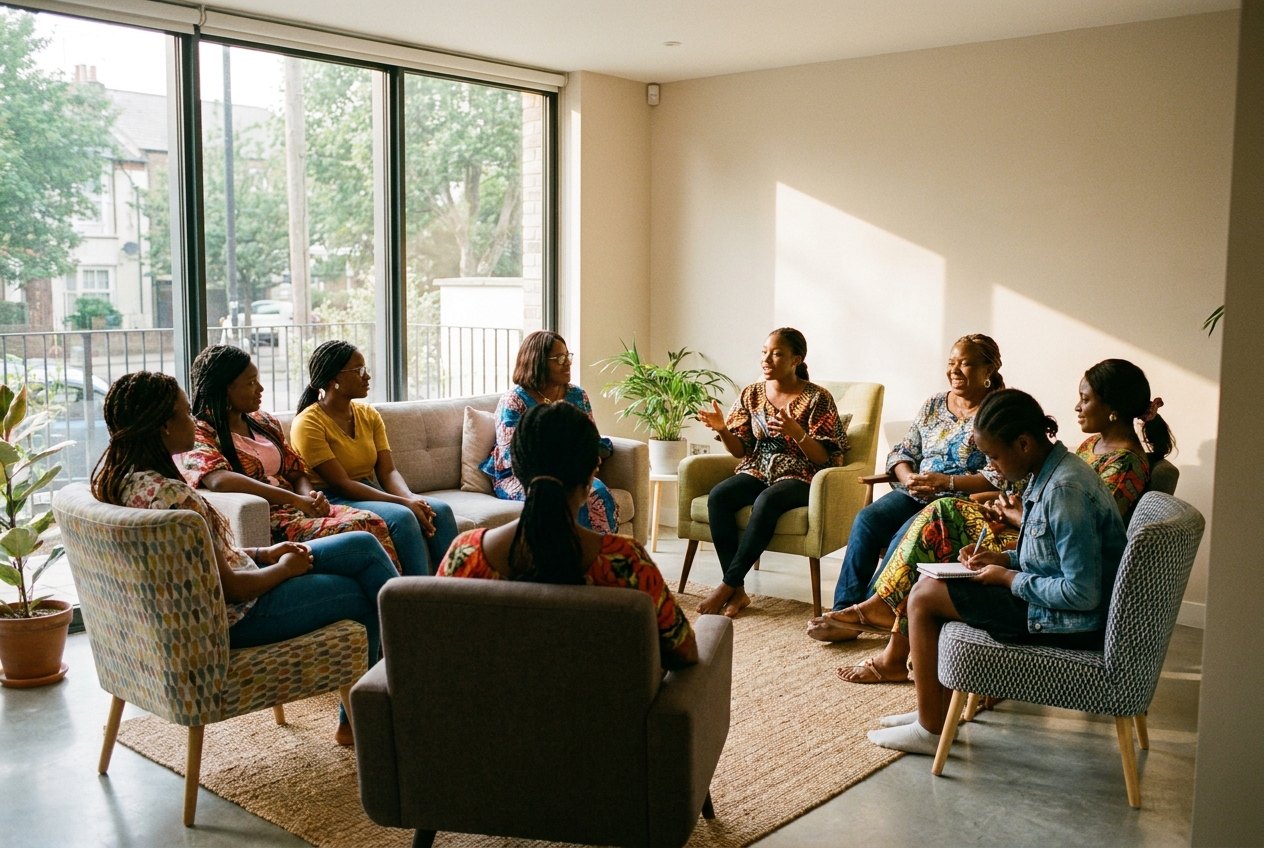
A safe space is not simply a place where women are comfortable. It is a place where they can bring their voices, their intellect, their experiences and their ideas—and leave better equipped to use them.
By Kate Ibeanusi
For Sisterz Only, Sheerah Verenda Full Life Initiative
“In 2008, I walked into a room full of women and left feeling very small.”
It was one of my first introductions to the women’s rights movement. Until then, much of my professional experience had been in the oil servicing sector, so I was entering a completely different world. I was new to the language, the conversations, the issues and, perhaps most importantly, the unwritten rules of the space.
I was there representing my organisation.
Everybody seemed to have an opinion. Everybody had something to say. And I had very little understanding of how to enter the conversation.
I felt invisible.
I felt insignificant.
And I left with what I can only describe as a bitter taste.
Interestingly, the meeting was led and coordinated by women, for women.
Yet, if you had asked me then whether I felt it was a safe space for me, my answer would probably have been no.
Not because anyone had necessarily set out to make me feel unwelcome. I don’t remember anyone telling me that I didn’t belong. The problem was more subtle.
I was new, and there seemed to be little room for being new.
Everyone already seemed to know the language. Everyone understood the conversations. Everyone was fighting for relevance in their own way.
Nobody was interested in holding my hand.
And perhaps they didn’t need to be.
I had been on the job for less than three months.
So when I walked out of that room, I made a decision.
I would learn.
I would build my capacity.
I would understand the space.
And I would find my voice.
I did.
Over time, I immersed myself in the issues, learned the language of the space, understood the direction of the conversations and gradually built enough confidence and competence to participate. Eventually, I was able to lead conversations in that same space comfortably.
That experience has stayed with me because it taught me something about agency.
It also taught me something about safe spaces.
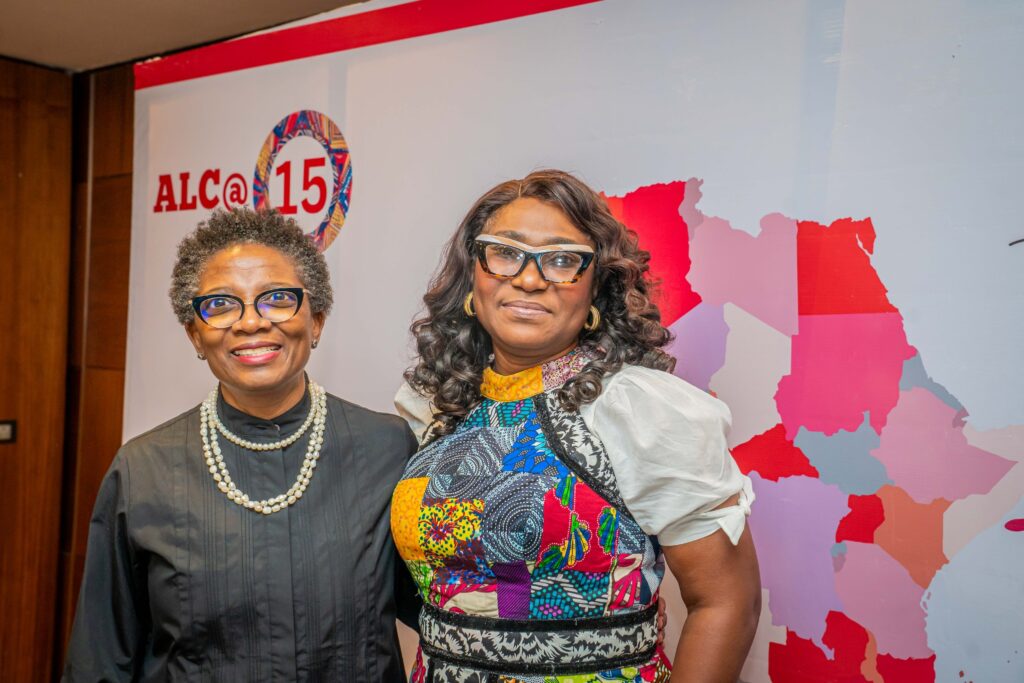
Years later, during my learning at the African Leadership Centre, I remember Professor Funmi Olonisakin of King’s College London telling us something that has stayed with me:
“Nobody will create a space for you at the table. When you come, come with your own seat.”
I have interpreted that in a very particular way.
Your seat is not simply your physical presence.
Your seat is your intellect.
It is your knowledge, your skills, your experience, your capabilities, your perspective, your values, your creativity and your lived experience. It is every asset you possess that can add value to the conversation you have joined.
Because what is the point of arriving at a table where everyone has an opinion if you have nothing to contribute?
We must take responsibility for building ourselves.
We must learn.
We must prepare.
We must develop the capacity to participate meaningfully in the spaces we seek to occupy.
“Coming with your own seat does not mean that the room gets to decide whether your seat is worthy of being there.”
And that is where safe spaces matter.
We live in a world where women have, for generations, been excluded or underrepresented in many of the conversations that shape society.
Politics. Governance. Security. Peacebuilding. Economic decision-making. Community development. Leadership.
Even conversations about issues that directly affect women’s lives can take place without women being adequately represented in them.
This is why we continue to talk about creating spaces for women.
Spaces where women can lead.
Spaces where women can learn.
Spaces where women can have difficult conversations.
Spaces where women can build businesses, discuss their experiences, understand their rights, support one another and develop the confidence to participate more fully in society.
I welcome these conversations.
But I also think we need to ask a more difficult question:
What exactly do we mean when we say a space is safe for women?
Because a space being created for women does not automatically make it safe.
A room can be full of women and still silence women.
A platform can claim to amplify women’s voices and still curate those voices so carefully that only certain kinds of women, ideas or opinions are allowed through.
A conversation can be described as inclusive while being structured around rules that determine in advance what can and cannot be said.
And sometimes, the people enforcing these rules are women themselves.
This is not about blaming women.
Many women are simply operating within systems that have taught them what women’s voices are supposed to sound like, how much space women should take, what is considered acceptable and when a woman has crossed an invisible line.
Systems reproduce themselves through people.
And that is why creating a genuinely safe space requires more than putting women in a room.
For me, a safe space is not simply a comfortable space.
It is not a place where everyone agrees with you.
It is not a place where nobody challenges you.
And it is certainly not a place where you are excused from doing the work of developing yourself.
A safe space is a place where you can find your space in the conversation.
You come with your own stake.
And we must acknowledge that everyone’s stake will not be equal.
We do not all come from the same circumstances. We do not have the same opportunities, resources, experiences or privileges.
But whatever you come with should have the possibility of being recognised as a valuable contribution to the mix.
You should be able to speak without fear of being judged simply because your perspective is different.
You should be able to ask questions without being made to feel unintelligent.
You should be able to disagree without being diminished.
You should be able to contribute without having to first conform to somebody else’s idea of what your voice should sound like.
And you should be able to leave without feeling smaller than everyone else in the room.
“Do you leave diminished, or do you leave enlarged?”
That, for me, is an important test of a safe space.
Do you leave having learned something?
Do you leave having contributed something?
Do you leave with a new connection, a new idea, a new possibility or perhaps a renewed belief in yourself?
If you do, then something meaningful has happened.
One of the things that concerns me about many conversations around women’s leadership is our tendency to amplify the voices that are already visible.
There is nothing wrong with amplifying visible voices.
But the loudest voices are not necessarily the most important voices.
There are muted voices.
There are voices that have been stifled.
There are voices that have been discouraged for so long that the women behind them have stopped believing that they have anything worthwhile to say.
There are voices that have never even had the opportunity to emerge.
Think about the woman whose voice is moderated at home because of cultural expectations.
The young girl who has learned that questioning adults is disrespectful.
The woman in the workplace who has brilliant ideas but has watched others receive recognition for speaking first.
The woman whose economic circumstances make participation in certain spaces almost impossible.
The woman whose religious or cultural environment has placed boundaries around what she can say and where she can say it.
The woman who has experienced violence and has been taught, explicitly or otherwise, to remain silent.
The woman in the community whose knowledge is dismissed because nobody considers what she knows to be expertise.
These women may not be the loudest.
That does not mean they have nothing to contribute.
Every voice counts.
Every suggestion counts.
Every experience contains knowledge.
Every woman has something she can bring.
The work is to create environments where those contributions can emerge, be tested, challenged, developed and valued.
This is where I believe the distinction between empowerment and capacity-building becomes important.
I strongly believe in the agency of women.
I believe in women’s ability to showcase their skills, their knowledge and their crafts.
I believe those capabilities should be recognised and validated.
But I also believe women must be given opportunities to develop.
When I think about a space that genuinely supported my development, I think about the Coady International Institute.
And this is not a Coady advertisement—although I will happily speak about Coady anywhere, any day.
What I experienced there was a space where development practitioners came with different levels of knowledge, experience and understanding.
You were not required to arrive fully formed.
You came with what you had.
You participated.
You listened.
You learned.
You were challenged.
You contributed.
And there were people willing to guide and handhold where necessary.
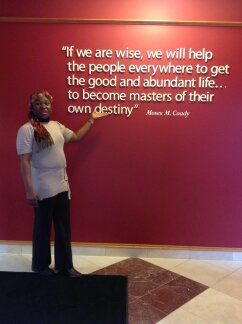
That experience showed me that there is a difference between being accommodated and being developed.
A good safe space does both.
It welcomes you as you are while creating conditions for you to become more.
For Sisterz Only is the women-focused empowerment platform of the Sheerah Verenda Full Life Initiative, designed to support leadership development, personal growth and psychosocial well-being among women and girls.
The platform was formally inaugurated in September 2014 with a simple but important goal: to create and sustain spaces where women and girls can develop, connect, learn, support one another and exercise their agency.
Over the years, that vision has included leadership and mentorship opportunities, psychosocial support, safe spaces for dialogue and forums, awareness around gender rights and gender-based violence, entrepreneurship and financial literacy training, community networking, peer support, counselling and training.
But at the heart of all of this is something much simpler:
“We want women to have somewhere they can bring their ideas.”
Not only during a campaign.
Not only on International Women’s Day.
Not only when a conference needs a woman on a panel.
Not only when somebody needs a woman’s perspective for a report.
But on an ongoing basis.
Because amplification matters.
But formation matters too.
We want to create periodic and seasonal opportunities for women’s voices to be amplified, while also nurturing a day-to-day environment that is safe, conducive and non-judgmental for women-led ideas.
A place where you can come with your own seat.
And where we recognise that the seat you bring may look different from mine.
Perhaps this is ultimately what I want For Sisterz Only to say to every woman and every young girl who encounters the Sheerah Verenda community:
You are welcome here.
Your ideas are valuable.
Your contribution is meaningful.
Your experience matters.
You don’t have to be the loudest person in the room to have something important to say.
And your idea does not have to fit neatly into the prevailing norm before it becomes worthy of consideration.
Sometimes the idea that does not fit the norm is precisely the idea we need.
That does not mean every idea will be accepted.
A safe space must still allow us to challenge one another.
It must allow us to disagree.
It must allow us to ask difficult questions.
It must allow us to discover that perhaps our own thinking needs to change.
But we can do all of that without making one another smaller.
“Safety is not the absence of challenge. It is the assurance that being challenged will not cost you your dignity.”
And perhaps that is the kind of space we need more of.
Spaces where women can come with their own seats, while still knowing that they do not have to fight simply to prove that they deserve to sit.
Spaces where women can develop the confidence to speak, the competence to contribute and the courage to lead.
Spaces where a girl can discover that her voice matters before the world teaches her otherwise.
Spaces where a woman who has been silent for years can begin to speak again.
Spaces where we don’t just amplify women’s voices.
We help strengthen them.
That is what For Sisterz Only seeks to promote.
Not a space that tells women they have no place unless somebody creates one for them.
But a space that says:
Come with your own seat.
Come with what you know.
Come with what you can do.
Come with what you are still learning.
Come with your questions.
Come with your ideas.
Come with your voice.
There is room here.
And perhaps, when you leave, you will not only know that you have a place at the table.
“You will be better prepared to use your seat.”
Kate Ijeoma Ibeanusi is a leadership, organisational development and social impact practitioner with more than 25 years of professional experience spanning research, programme and project management, leadership development, gender and social impact. She is the Founder of Sheerah Verenda Full Life Initiative, Kate Ibeanusi Consulting Limited, and host of Unsilenced Voices that Matter and is passionate about creating platforms that enable people especially women and girls to develop their capacity, find their voice and contribute meaningfully to society. Through her writing, mentoring, coaching and community work, Kate explores leadership, identity, purpose, personal growth and the conditions that allow people and communities to thrive.
For Sisterz Only is a women-focused platform of the Sheerah Verenda Full Life Initiative, creating opportunities for women and girls to develop their leadership capacity, strengthen their well-being, connect with one another, access support and bring their ideas into spaces where they can be heard and valued.
The platform is rooted in a simple belief: Women do not need to be made worthy of a seat. They need opportunities to develop, exercise and use the capacity they already possess.
Keep reading
Migration
The race to “Japa” is real. So are the dreams behind it. But no dream should require a young person to gamble with their life—and no…

Forthcoming
Economic Empowerment
One woman with a stove has a job. Twelve women with a shared kitchen have a business. How pooling equipment, orders and risk changes what a…

Forthcoming
Mental Health
Why mental health rarely appears on a household budget, and what it costs anyway — in work missed, school interrupted, and families carrying alone what ought…
Let’s Begin
Sheerah Verenda is powered by passionate individuals committed to community wellbeing. Whether you bring professional skills, lived experience, partnership capacity, or the desire to contribute — there is a place for you here.